How to Make Clotted Cream

How to Make Clotted Cream (Oven Method)

by Stephanie Stiavetti on July 18, 2011

in Baking and Sweets, Breakfast, Gluten Free, Recipes

Learning how to make clotted cream is really easy, but a lot Americans don’t know this. Instead, most people still opt to buy it in little jars at specialty grocery stores for like $8 a piece. I’m completely baffled by this behavior, because, really, making clotted cream only takes about five minutes of actual work. It’s produced by gently heating uber-rich heavy cream until a thick layer forms on the surface. This thickened layer is removed, stirred, and you have clotted cream. Yup, that’s it. Seriously.

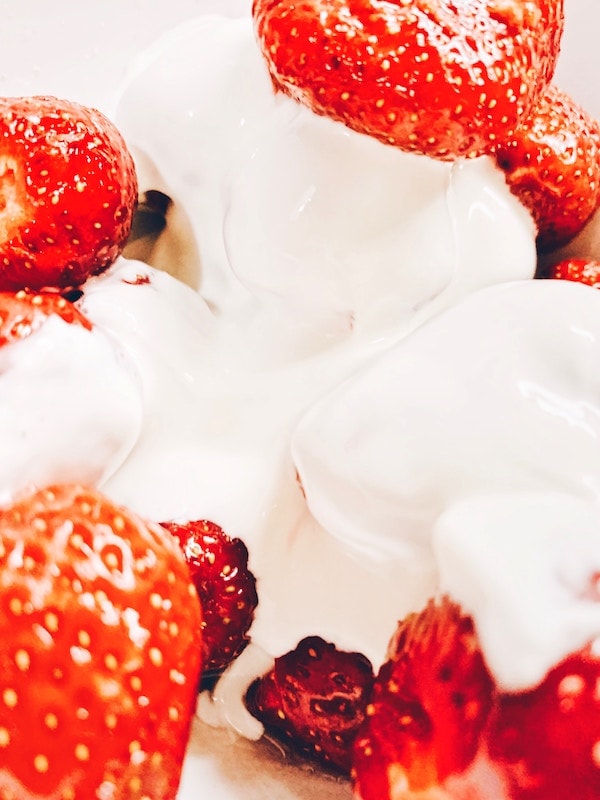
Clotted cream, also known as Devonshire cream, is a part of the traditional English “cream tea,” during which the cream is served alongside scones, jam, and tea. Clotted cream can also be spread on English muffins, served with a sweet bread, set in a dollop atop fresh fruit, or used as a tart garnish for a myriad of sweet desserts.
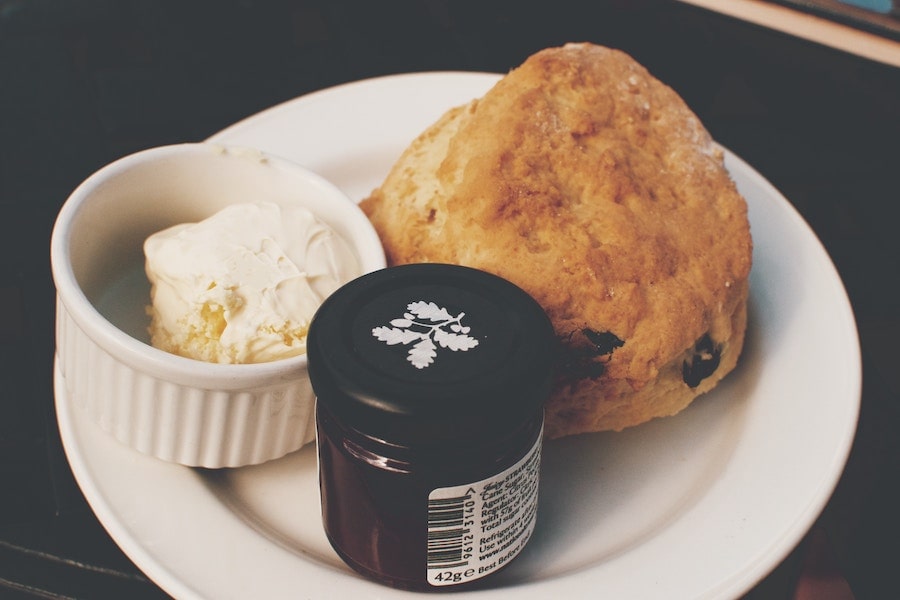
Why bother learning how to make clotted cream? First of all, it’s insanely decadent. Its sultry creaminess exists on a plane somewhere between whipped cream and butter, providing a perfectly rich topping that still maintains a breathy lightness of fresh dairy. You’ll want to use the best heavy cream you can buy here, though if all you can get is the generic brand at your local supermarket, the finished product will still be light years ahead of the drek they sell in little jars for a king’s ransom.

How to Make Clotted Cream (Oven Method)

Yield: 2 cups of clotted cream

Ingredients:

  • 4 cups heavy cream – NOT ultra-pasteurized

Recipe method:

1. Pour heavy cream into a shallow glass pan that allows for a lot of surface area. Cover the pan with foil, then place in the oven at its lowest temperature – if yours has a ‘warm’ setting, then perfect – for 8 hours or overnight. Do not stir!

2. After 8 hours has elapsed, carefully remove the pan from oven, being very careful not to agitate the cream. With a slotted spoon, gently skim the thick layer of clotted cream from the surface, leaving the thin milk liquids behind. You can use the liquid much like you can reuse whey, in bread, soup, rice.

3. Gently stir the clotted cream to create a smooth, creamy texture. Store in the refrigerator for up to 4 days, in a tightly sealed container so that it doesn’t pick up strange flavors. Bring to room temperature before serving.

If you like learning how to make clotted cream, check out these other recipes:

{ 15 comments… read them below or add one }

notblueatall July 18, 2011 at 11:05 am

What?! I love clotted cream, but hadn’t a clue how it was made or even what it really was. Cool, but how do I know if the cream I am buying is ultra-pasteurized? Temp: how low is too low? 8 hours? What about bacteria? Sorry, but I’m a food safety nerd and a bit of a germaphobe. Now, just gotta make some scones and YUM!

Reply

Stephanie Stiavetti July 19, 2011 at 12:56 am

No, it won’t go bad… yogurt is made by essentially heating it to just above room temp overnight, a similar process. It’s just the fermentation process. :) Heat should be low – I don’t think there’s too low, as long as it’s warm. ;) You might even be able to use a heating pad on high.

The carton will say ultra-pasteurized, or just regular pasteurized.

Reply

Melanie @ Frugal Kiwi July 18, 2011 at 8:51 pm

Kiwis are very fond of a Devonshire Cream Tea-scones, cream, raspberry jam and a cuppa. I don’t think they normally have proper clotted cream though, just normal whipped cream. Yours would be much nicer.

Reply

Stephanie Stiavetti July 19, 2011 at 1:01 am

I should do a tea-scone post, eh? Do you have a recipe you like? I think a Kiwi version would be a little more unique than a British version. ;)

Reply

Sheryl July 21, 2011 at 10:48 am

So ironic. I went for afternoon tea just yesterday – a real and rare treat for me – and above all else, was looking forward to – you guessed it – the clotted cream for the scones. Heavenly…

Reply

Stephanie Stiavetti August 5, 2011 at 10:48 pm

Isn’t it, though? :)

Reply

withinseason August 3, 2011 at 6:18 am

This sounds great! Which of the methods do you think is best? Are they comparable? The oven sounds good in terms of easiness, but my oven tends to run too hot for low-heat recipes (it ruins yogurt).

You should totally do a tea-scone post. I’ve been using Darina Allen’s griddle scone recipe for a quick(ish) breakfast that is fantastic, but haven’t really found a good tea scone recipe yet.

Reply

Stephanie Stiavetti August 5, 2011 at 10:48 pm

I personally think the slow cooker method might be best for you, or the double-boiler stovetop method. Both are easier to control, temp-wise.

And you know, I think you’re right! I should do a tea scone post!

Reply

Kathleen August 16, 2011 at 8:36 am

I am making clotted cream with organic, grade A, raw cream.
I have 2 pints in a shallow oven proof pan, covered.
What I can’t figure out is what temp. Currently, I have the oven temp at 125, a dense batter proof temp. Is that too low? Too high? Anyone know, for sure?
Thank you.

Reply

Aj November 18, 2012 at 12:01 pm

I tried this yesterday. 10 hours at 170 heavy lightly pasteurized cream and the out to cool for an hour and the into the fridge. Today I tried to skim the top off and it was a thick hard almost waxy golden top layer. Any ideas what I did wrong? I forgot to cover it with foil so I’m wondering if that was my big mistake.

Reply

Stephanie Stiavetti November 18, 2012 at 12:42 pm

Yup, not covering it will cause it to get hard and weird. The foil keeps the moisture in – the air conditioning in fridges really dry things out!

Reply

Rechenschwäche January 29, 2013 at 6:38 am

I love the recipe because I really love clotted cream but 8 hours in the oven is such a long time. Just thinking about the energy…

Reply

Stephanie Stiavetti January 29, 2013 at 9:03 am

Definitely a good point. You might try the slow cooker method, or one of the other methods I have on the site…
Slow cooker: http://www.theculinarylife.com/2011/make-clotted-cream/
Double boiler: http://www.theculinarylife.com/2011/recipe-for-clotted-cream/
Stovetop: http://www.theculinarylife.com/2011/clotted-cream-recipe/

Re: the slow cooker method, some slow cookers get too hot to do this correctly and may scorch the cream, so keep an eye on it!

Reply

Glen March 20, 2013 at 9:37 am

Tried this with 38% fat, pasturised cream (not ultra-pasturised), after 8 hours it only had the slightest hint of a top skin, so I decided to leave in in for longer, after 19 hours, 1 hour to cool and 8 hours in the fridge, I got a “leathery” top skin and “milk” underneath. Nothing at all like clotted cream at least. I don’t think “warm” is correct. Perhaps this method works with “straight from the farm” non-pasturised cream, which is what they use for making proper clotted cream, but this didn’t work for me at least.

Reply

Stephanie Stiavetti March 20, 2013 at 9:44 am

Glen, I think it depends on your oven. I’ve had a lot of luck with this recipe, as have others. Occasionally someone does pop in having a bit of trouble, and the only reason we’ve come up with is variance between ovens. Some ovens have ‘warm’ temp, others do not. Some have a low temperature setting at 175, others have 220. It’s sort of a crapshoot as to which oven you have. You might try increasing the temperature a touch and see which works for you.

Good luck!

Reply

Leave a Comment

{ 7 trackbacks }

Previous post:

Next post: